4.28.2011

Writer to Know: Madeline L'Engle


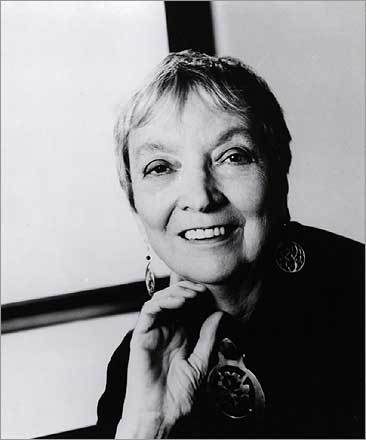
Madeline L'Engle is one of my favorite writers. Most people have read her 1963 Newberry Award winner A Wrinkle in Time. But the book I return to again and again is Walking on Water: Reflections on Faith and Art. Instead of praising all the different books she's written, today I am going to pull out two quotes to share with you.

***

"To trust, to be truly whole, is also to let go whatever we may consider our qualifications. There's a paradox here, and a trap for the lazy. I do not need to be "qualified" to play a Bach fugue on the piano (and playing a Bach fugue is for me an exercise in wholeness). But I cannot play that Bach fugue at all if I do not play the piano daily, if I do not practice my finger exercises. There are equivalents of finger exercises in writing books, the painting of portraits, the composing of a song. We do not need to be qualified; the gift is free, and yet we have to pay for it."

***

"When another young woman told me that she wanted to be a novelist, that she wanted to write novels for Christian women, and asked me how was she to go about it, I wrote back, somewhat hesitantly, that I could not tell her because I do not write my books for either Christians or women. If I understand the gospel, it tells us that we are to spread the Good News to all four corners of the world, not limiting the giving of light to people who already have seen the light. If my stories are incomprehensible to Jews or Muslims or Taoists, then I have failed as a Christian writer. We draw people to Christ not by loudly discrediting what they believe, by telling them how wrong they are and how right we are, but by showing them a light that is so lovely that they want with all their hearts to know the source of it.
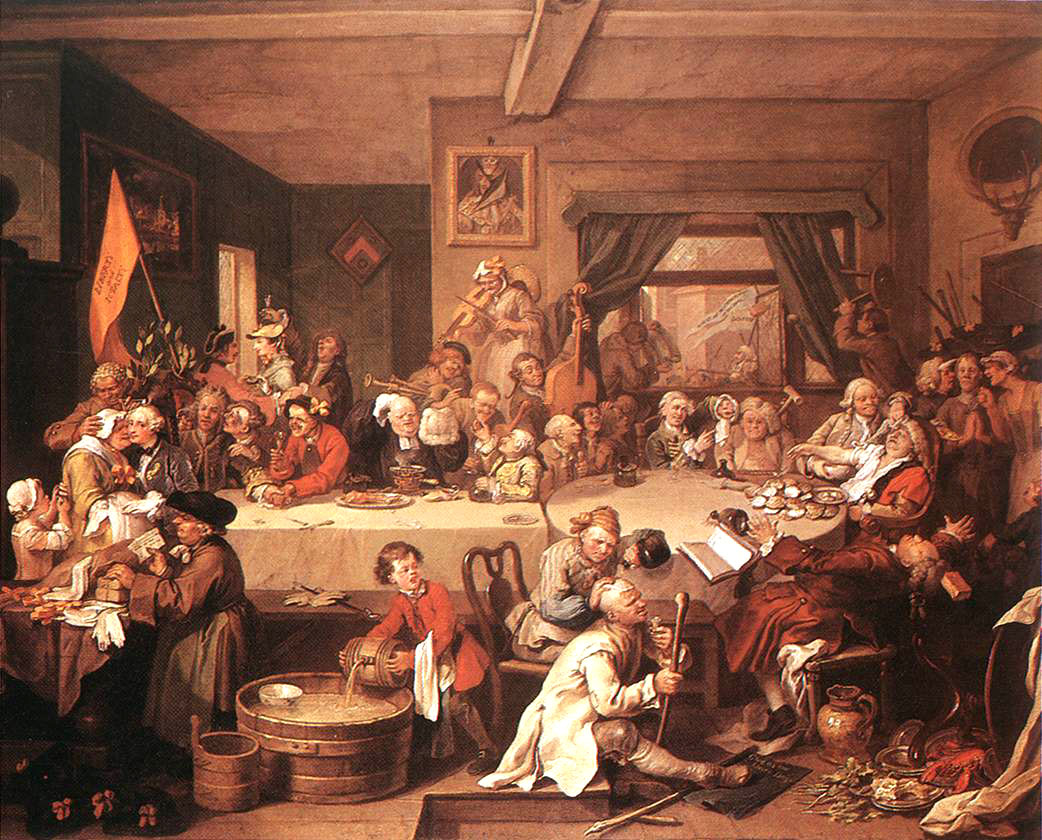
     If our lives are truly "hid with Christ in God," the astounding thing is that this hiddenness is revealed in all that we do and say and write. What we are is going to be visible in our art, no matter how secular (on the surface) the subject may be. Some of those angry etching of Hogarth, depicting the sordidness and squalor and immorality caused by the social inequities of his day are profoundly incarnational, for they are filled with anguished pity for the thief and the prostitute and the scum of the earth, and this compassion is Christ's"

[The hyperlinks are my addition.]

4.26.2011

Writer to Know: C.S. Lewis


If C.S. Lewis were to publish his books today, there would be such an outcry from most Christians in America that it would rival rants about witchcraft in Harry Potter. Yet, he is (nearly) canonized by Christians across denominations. His Chronicles of Narnia books have remained in print since they were written and three of them have been made into movies. His Space Trilogy are respected works of science fiction. His autobiography Surprised by Joy is touching and full of unexpected moments. Mere Christianity should be standard reading (at least the first half) for new Christians.

His popularity within Christian circles can produce Lewis-burnout, but we should not mistake distaste for people who over-quote Lewis with distaste for Lewis' writings. For I wonder if many of the people who quote him, fully understand how often un-orthodox his views sometimes were.

He is one of my role models, not because he is the best writer in the world (Roald Dahl, in his book Matilda summarizes it well when Matilda says, "There are no funny parts.") but because he writes non-fiction and fiction, faith and imagination, serious philosophy and serious children's stories. What kind of writer is he? He is every kind of writer that C.S. Lewis could be, and that is both honorable and enviable.

If you have only read his fiction, I suggest getting a copy of Reflections on the Psalms. If you have only read his philosophical works, get a copy of A Horse and His Boy. And if you haven't ready it, read his autobiography Surprised by Joy. It will be worth your while.

4.25.2011

What I've Learning Being Off Facebook


I decided to give up Facebook for Lent, not for any particular religious reason, but because it was a nice time-frame to use for my own purposes. I had Caryn change my password so that I would not even be able to log into my account. And as Easter has come and gone I thought it would be worth noting a few things I've learning in my time away from the Big Blue Monster which feeds on your time.

First, a note on why I did this. I don't think I spent a lot of time on Facebook. I know this is a relative statement, so let me be more specific. I estimate that I spent around a half an hour a day on Facebook. This was broken down into one minute to ten minute segments and spread over an entire day. This is just a fact of how I was spending my time, neither bad nor good.

There are two thoughts that motivated me to to try giving up Facebook. First, Is this all it is? I kept thinking, why do I keep checking Facebook? What am I looking for? What am I hoping to see? Some people love to be voyeurs into what other people are thinking or doing, but I couldn't help but see most status updates as cries for attention.

Second, there were a lot of other things I would rather do if given a half hour a day. These include exercise, reading, writing, blogging, baking bread, or even cleaning the house. When I stepped back and examined my life, asking myself, "What kind of life do you want to lead?" Facebook wasn't a big part of it. I could go on further about both these points but the takeaway is that I am not making any big statement about Facebook in general, but about my own personality and the kind of life I want to live.

Things I learn by giving up Facebook

1. Facebook has some good things about it.

Facebook has allowed me to keep in contact with my brother (Chicago) and sister (Denver) more easily. I have a general sense of connectedness to cousins, people I went to college with, seminary peers, and other people I no longer see on a regular basis. It also provides a personal interaction between co-workers because I can see pictures of their families or share a game of Scramble.

2. Facebook offers a general sense of connection but it shouldn't be mistaken as good as face-to-face conversations.

It is too easy to believe that I am connected with people through Facebook who I probably owe a phone call, email, or visit. I justify not doing these things because I am comforted by the vague sense of connection that Facebook gives; just enough so that I don't feel the distance of a friend who has moved across the country, but also just enough that I don't do anything to maintain a connection more serious that clicking "like" on a status or photo.

2. Facebook is the future.

I have some co-workers who still insist that WordPerfect is a better program that Word. I have listened to their case and I'll admit that for their purposes, it is a superior tool. At the same time everyone uses Word. You cannot fight against the sheer numbers of people who use a product. In the same way, you need to have a Facebook account because Facebook is already deeply woven into the way we live our lives. It is become as ubiquitous as (and occasionally replacing) email, necessary as cell phones, and as useful as Google.

3. Facebook is not the future.

Facebook is a choice. Spending weeks not logged in as has made me realize that I don't have to have a Facebook account to be happy, stay connected, be efficient, feel cool, or have friends. Facebook needs to serve the life I want, not the other way around.

4. You need to set the terms/limits of your Facebook interaction or it will naturally suck you in.

Facebook is the casino of the Internet. Real casinos are designed so that every time you want to leave, or go to a restaurant or the spa, you need to walk all the way through the main casino floor. The rooms don't have cable television and have sparse accommodations. Everything is made to send you into the gaming floor. Why do you think that Facebook keeps tweaking their format and layout? Because they know how to make the experience more addicting. Why do you think they call people you're linked to "friends" and not something like "connections"? Because they want everyone connected. So instead of "setting a healthy boundary between myself and an old high school girlfriend" I have to "de-friend" her. Harsh.You need to decide how you are going to use Facebook because otherwise Facebook will decide for you.

Conclusion: I'm going to log into Facebook tomorrow. (I had to reset my password because the one Caryn had didn't work and they lock you out for 24 hours after resetting a password.) I'm sure I'll have missed interesting things, but I've actually liked it a lot not being on Facebook. It feels kind of weighty to being going back, like I'm someone accepting an obligation. But who knows, maybe after a couple of months I'll shut down my account all together. For now, I'm going to set some rules for myself. Log-in no more that two times a day and take one day each week and not log in at all.
4.18.2011

Why We Look after Blowing Our Nose


I am almost over a wicked cold that I picked up from one or both of my kids. Symptoms included: body-ache, sore throat, headache, cough, and a furious runny nose. This last one is particularly bad. I went through at least a box and a half of Kleenex. I'm beginning to feel well enough to resume normal activities like blog entries, speaking in a normal octave, and shaking my fist at the falling snow that has no right to invade the skies in the middle of April. I also have the energy to reflect on an aspect of being sick that I had not ever put much thought into: the admittedly gross practice of looking into a tissue after I had blown my nose.

Maybe it was because my nose was producing amazingly amounts of mucus, but I kept examining the tissues I used. I marvelled when I needed to use three of four tissues to clear my sinuses. I never called Caryn over to look, but I did have a moment of self-awareness when I thought to myself, "What am I doing? This is really gross. What am I hoping to see?" For several minutes I could not come up with an answer other than that I am disgusting. But I cannot be alone in this curiosity. There must be other people who examine their used tissues, or who stare into the toilet, or obsess over their fingernails, or whatever other socially unacceptable self-examination that interests them.

Maybe this impulse is why people go into medicine. I am normally repulsed by the interior of bodies: valves, arteries, membranes, bile, hemorrhage, just a few of the words that can send me to the ground with my head between my knees. It's possible that, despite my aversion, I'm still interested in what makes me a flesh-and-blood human being. It's just that my comfort level end with used Kleenex. I mean, that yellow-ish flem, that was...is...was....me! Or a part of me at very least.

People are not as physically defined as we sometimes think. Food moves in and out of us, as does air and water. Sounds too, enter our ears and leave our mouths (and other parts). Blood can even be moved one person to another, body parts too. Skin cells shed and are replaced by other. Environmental toxins enter us and can accumulate in dangerous and deadly ways. It is not so much that we are independent animals operating in our world around us, rather we are woven into the fabric of the earth, or maybe the earth (and water, air, bacteria, dust, etc.) and woven into us into mystical quilt of human life.


And that  was only one though that came to me as I looked into that used tissue.

4.14.2011

I Can Finally Stop Parenting

Parenting is a lot of work. I often find myself tired in the evening when I wish I had even enough energy to make it to the end of The Biggest Loser.

But upon a recent trip to my local library with the twins, I struck upon a genius idea, an idea that should make parenting much simpler, easier, and give me more time and energy to enjoy hobbies that often get pushed aside. The only question I had was, "Why hadn't I thought of this earlier?"

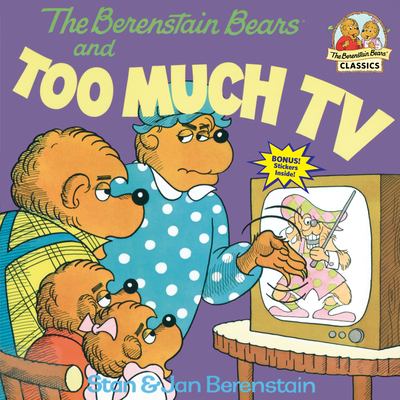
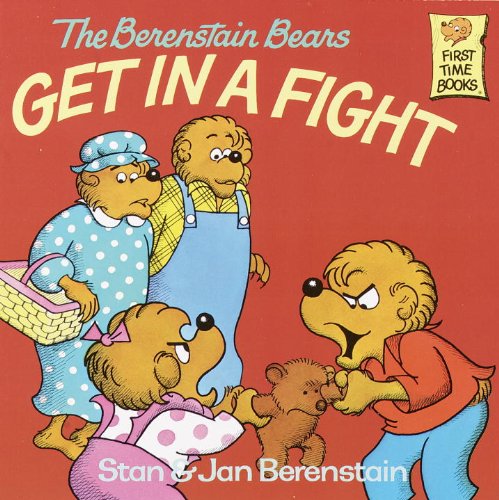
Let the Berenstain Bears raise my kids.


There are Berenstain Bear books that address every possible parenting situation that you could think of, or at least most of the major ones. There are close to 350 titles in this series. I'll start with a few of my favorites that I remember reading in my own childhood.


But just because you remember a few books, don't think you don't need to revisit Bear Country USA and see what's changed. Papa Bear still has his backwoods overalls and Mama Bear is still rocking her housecoat, but times have changed so Brother Bear and Sister Bear have had to be prepared for new things. Things like...


Women working outside the home:
How to handle gang initiation:
Global Warming:
or the growing number openly nerdy people in society

I could go on and on, but you can visit Bear Country yourself and learn more about how easy parenting actually can be. I know that I'll be ready for whatever life throws at me. When my kids ask me...

Why is that man in a chair with wheels? I've hand them:

Why are there no professional female football players? They get:


Dad, can I start a boy-band? They'll learn all about the problems of a life in rock and roll from:

And now that the Berenstain Bear books are published by Zondervan, a Christian publisher, they have converted the Bear Family from nominal Judaism to evangelical Christianity, which makes my job even easier. I can hand over my kids spiritual formation in addition to their personal, social and emotional formation.


It is such a sweet sense of relief to be able to let go of the sense that I had to try and explain anything to my children. I think I'll make Bear Country, My Country.

3.31.2011

A Good Way to be a Parent

There are a lot of different ways to be a parent.  Some people parent "from the hip" without reflecting on why they do what they do. Now, all people make assumptions about the proper way to act, but parents who approach raising children as a casual affair are going to pass along whatever baggage they received from their parents. This can include the stifling of emotions though repeatedly telling a child, "Don't cry. You're all right." It could be creating an unhealthy relationship with food though battles at the dinner table. Or it could be fostering jealousy between siblings by unconsciously treating a low-maintenance child differently than a child that requires more attention.

My wife and I agree that this is not the way we want to be parents to our children. We know that we will undoubtedly mess them up in our own special way, but we want to minimize the effect as much as possible. So we approach parenting the same way we approach learning (and mastering, which requires constant learning) any skill. We read, talk, try, reflect, adjust and then hold each other accountable when we loose our cool and let our emotions drive how we act and talk.

One of the blogs both my wife and I read had a good article that summarized how we try to equip our children to deal with their emotions. We don't always do everything perfectly, but that's not the point, the point is that kids have needs that sometimes get mis-interpreted by adults who have not thought through how they are going to respond when kids do typical kid things: push limits, yell, fight, cry, destroy your house, refuse to eat, spill, are melt down with emotion.

3.30.2011

You Can't Make Me Care

[This post is kind of the anti-thesis of the previous one.]

The world wants to tell you what to care about. On the societal level, this is called advertising. Care about your skin, your car, or the sheen of your shampoo. Care about (what people think about) the cleanliness of your house, the name on your jeans, the reading on your bathroom scale. Care about this so you will buy that.

On a personal level, people also want you to care about the same things they care about. Preachers, teachers, parents, friends, writers, politicians, cousins, neighbors - everyone has their own agenda. It may not be malevolent, quite the opposite. Some people believe dearly that the issues that move them most deeply should move everyone as deeply. They cannot understand why your priorities or your emotional reactions, are any different.

I think everyone has had at least one conversation where the person you are talking to is getting riled up and you think, "I simply don't care about this." I feel that way about many, many things. A fine example of this is homosexuality. I just don't care enough to develop an informed opinion about this issue. I don't feel like wading through the social, biblical, psychology, anecdotal and personal evidence on this matter. So if you ask me what I think I'll just shrug my shoulders and say, "Meh." It isn't that I think this issue and its implications are unimportant. It's just that it is unimportant to me.

Just as there are too many choices of peanut butter, there are too many things to care about, too many worthy causes to give to, too many honorable movements to "like" on facebook. And there isn't enough time to care about them all. There isn't enough energy in my body to make me care about everything I, as a good, thoughtful, Christian, am supposed to care about.

So I make choices, and I'm sorry, but while you may think that society is on a moral decline because of X (and who knows, you may actually be right!) I am happy to let you solve that problem, but don't tell me about it, because I don't care.

Some examples...

I don't care about taxes. I don't care if they are raised or if they are lowered. I don't care about the super-rich who control everything. I don't care about the fact that Social Security won't exist when I'm 65 years old.

I care about children. Not just my own, but all children. It breaks my heart that there are children in this world that are abused, neglected, or that go to bed hungry, cold, and alone. I care that there are children in Foster Care because this means that Christians have failed to love and provide for those who need it the most. Until Christians do a better job caring for children, we should stop calling ourselves Christians, perhaps only saying that, "One day we aspire to be Christians, but for now we are just play-acting."

I don't care about labels. Republican or Democrat. Conservative or Liberal. Rich or Poor. Evangelical or Reformed or Christian Reformed or Emergent. Modern or post-modern or post-post-modern. They are useful only to dismiss another person or their ideas.

I care that the majority of Christian are daily abusing their bodies by eating things barely classifiable as food and drinking things that should be categorized as drugs. I care that most pastors are over weight. I care because I don't think you can be spiritually healthy without being physically healthy. I care about making my own bread and eating more vegetables. 

I don't care about what you think.

I care about what you do.

I don't care about what famous people think or do.

I don't care what you think of me.

I care how you treat me.

I don't want to hear about how much you care about something. Unless you show me passion. If you show me why I should care, then I might. But I'm not making any promises.